Damp January Borders

This January has been damp again, like the last few months, and not the best condition to garden in day in day out, but work must carry on as otherwise spring will be upon us and the beds and borders will not be cleared, shrubs and roses pruned, and sheds tidied.


The herbaceous borders are now cleared, and forked over, in readiness for their mulch which we shall put on during march. This is a process which we carry out on all the beds during winter.
First, all the old and dying foliage is removed to the ground, using secateurs or shears depending on the type of plant. This gets put into our petrol driven 3-wheeler truck (which was incidentally a birthday present to Lady Bowman-Shaw many years ago from her husband - and is still going strong!) to be taken away - much more efficient than barrows given the amount of material we remove.

Then we carefully rake over the soil to remove leaves which have collected during autumn, paying careful attention to the base of shrubs and grasses so no hiding places for bugs, slugs and disease remain.

Lastly, the whole bed is 'forked over' which is carried out using the smaller ladies fork or border fork, and lightly aerate the top 3-4 inches of soil - this incorporates the remaining mulch from last year, and exposes any pests and/or their eggs.

I like to make sure that any dips and bumps are removed from the beds at the same time by gently sweeping the fork from side to side after forking over, this gives that professional finish and also breaks down any large clods of earth left - then we stand and admire for a little while - before the bunnies, pheasants and leaves blowing about in the wind start to mess it up again! We will tidy them up quickly before the mulch gets put on though, so nothing is buried underneath.

Updates for The Garden - 2007


You may have noticed that my updates for the garden in 2007 have been a bit thin on the ground!


Apologies for this, but this year has been very busy for various reasons, such as a range of new garden courses, getting married, a very dry spring then a very wet and dismal summer, flooding in the garden, many weeds and the lawns continuously growing, as the garden has 'enjoyed' damp and warm conditions most of the year.


I will update you with what has been happening with new posts, looking back at the year to date.

Snow in January's garden

This month we had our first snowfall in Toddington. It had been exceptionally mild and wet before this, but unexpectedly one morning, we woke up to a crisp white blanket covering everything. Gardens always look so neat and clean under the snow, and there is little gardeners can do outside, but it is always worth checking no branches have snapped under the weight of the snow, and theres always the job of keeping the driveway and paths snow free!


This photo show the woods behind the Manor, the main lawn in front of the house and the wonderful mature trees like the walnuts, ceder of lebanon, wellingtonias, silver lime and copper beech. The cricket square is at the bottom of the photo, as the grass is kept shorter here, it stands out against the longer outfield grass.


There a few plants braving the cold conditions of winter - the hardy ferns including dryopteris wallichiana, helleborus orientalis is almost blooming, and the marbled leaves of arum marmoratum are looking lovely.
The structures in the garden such as the wooden obelisks in the main herbaceous borders stand out against the snow too.

Our pleached are waiting patiently to be pruned back their knobbly knuckles, but look glorious against the pink manor and white snow. They are the red stemmed cultivar - tilia platyphyllos 'Rubra', so we like to leave the stems on as long as possible so providing interest during the long winter months.

Fog.... and more Fog


A few weeks ago (in December) the whole garden and estate was shrouded in fog for days. Flights started to back up at the airports, and the whole world had gone quiet. High pressure does a wonderful job of creating a sense of stillness and quiet in the garden. I love this atmosphere, even though its so cold going down the drive on the bicycle!


Then the sun starts to seep through the murk and walking around the garden looks completely different - I guess you are only focusing on the ground as these is a white blanket above, so details seem to jump out at you much more. There is little you can do outside on days like these where the frost doesnt lift, so its a good chance for us to tidy the greenhouses and vinery.


November colour in the Garden

We are getting later and later frosts these past few years, so the first frost now seem to occur in November, rather than October. This helps prolong the colour in the borders, although as the winters are now effectively shorter, this leaves us with less time to thoroughly clear the borders - yes, it really does take about 4 months to tidy, clear away dying foliage, weeds, move stray plants and fork over the all the beds at Toddington Manor.

When we have the first frost it always seems to catch me by surprise - the summer evenings seem so recent and the borders still look good. I always keep a close eye on the water forecast so all the large summer pots placed around the garden with tender margurite Daisy's are all safely tucked away in the frost free vinery.
The dahlias and cleomes still look great while the frost is still on them, but tomorrow morning all the cells will have been ruptured and turn the whole bloom to a dirty sodden brown lump - not so attractive!
Our rich red rhubarb chard will not suffer so badly - the outer leaves may be for the bin, but the inner leaves will still be able to be harvested. In fact, this is one ornamental vegetable I would not be without in the ornamental potager. It seems to tolerate heavy rain, drought, pests leave it alone, it is easy to germinate, looks gorgeous whilst patiently sitting there waiting for a gardener to harvest the rich red, crinkly leaves.
It is even listed as a super food along with the equally spectacular kale. They both have an 'acquired' taste, which basically means they are both quite bitter compared to the ordinary vegetables you can buy at the supermarkets, but combined with other vegetables, especially in soups, they are really quite good.

Autumn leaves

Have been very busy of late with another project, but have found a little time over the holidays to update you all on whats been happening over the past couple of months at the Manor.

We have had a very windy Autumn in Toddington this year. Not so good for gardeners as working on days when the wind incessantly blows can really wear you down somehow - the gardeners have been talking about this and the end result was that if you wear ear defenders whilst weeding, it doesn't affect you at all, so it must be the noise that makes your head 'busy'!
Feeling pretty daft while wearing them though!!!


Its lovely when the wind blows when the leaves are falling though, as we use petrol powered leaf blowers to move the leaves of our lawns, (which means wearing the aforementioned ear defenders.) Otherwise the worms end up dragging them down under the soil, and really makes the lawns quite messy. Also, the leaves collect in sheltered corners and if left to sit there for more than about a week the grass underneath will yellow and even die eventually.

Toddington Manor is very lucky to have some wonderful trees on the main lawn, and some of these colour well in the autumn, such as...


Red Horse Chestnut (aesculus x carnea)


Persian Ironwood (Parrotia persica)


Golden Robinia (Robinia pseudoacacia 'Frisia')


Growing Ratatouille in the greenhouse!

As this summer has been so long and warm, the vegetables we have been growing in the greenhouse have loved the conditions and we have harvested a wonderful crop.


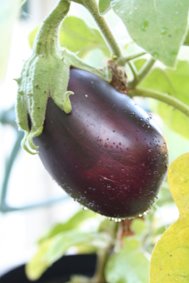
The Aubergines are swelling bigger and bigger and the colourful peppers are ready to be picked. We have been growing a colourful selection this year including some black one, which eventually ripen to bright red.


Whitefly has been a bit of a nuisance through the summer, but we have controlled this organically by spraying soft soap onto the underside of the leaves, where the whitefly tend to collect.

Watering need to be regular and using tomato feed on all the plants each week has helped the plants to crop well, and stay healthy too.


All of these plants can also be grown in a sunny sheltered spot in the garden, but will benefit from a period in the greenhouse in spring to give them the long growing period they prefer to fruit well.


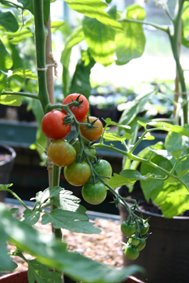
A bumper crop of tomatoes were grown, again relishing the long summer, and the sweet gardeners delight were delicious.


Another easy crop we grew were the chilli peppers. They not only look fantastic, but add a real kick to the ratatouille!

Great Dixter - gardeners day out

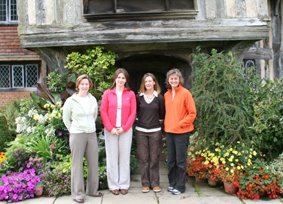
Every year the Gardeners enjoy a treat- a day out visiting a garden with the owner of Toddington Manor, Lady Bowman-Shaw. This year we all agreed that Great Dixter, home to Christopher Lloyd who passed away earlier this year was to be the one.

It was a girls only day out for Barbara, Debi Rachael, Lady Bowman-Shaw and myself, as Tony was waiting for his new baby to be born imminently! Just as we arrived the heavens opened and we had to wait for the rain to pass, sheltering under the precarious old entrance porch.

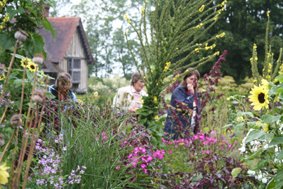
We then thoroughly enjoyed looking around the garden, trying to identify plants we were unsure of, and appreciating many of the sucessful plant partnerships that Great Dixter is so well known for.
Many of the combinations rely on annuals, bulbs and half-hardy perennials being planted out throughout the year, so although it looked fresh and colourful, we all agreed it looked like continual hard work!

The main parts of the garden were in the main quite traditional, although with flamboyant use of colour, while at the front of the house, the exotic garden and the cactus juxtaposed against the 15th century manor house caused many comments as it was so much fun. Many of the plants were tender, so were unfamilar to the gardeners growing outside, but everything looked healthy and well cared for, obviously loving the hot summer we have had this year.

We always have a notepad to write down ideas for Toddington Manor, and we are definately planting more crocosmias for next year, Crocosmia 'Citronella' caught our attention, and Atriplex hortensis var. Rubra looks like an annual well worth planting, and an unusual elder, Sambucus formosana with fantastic orange berries.

Croquet lawn 'Umpires Bank'

At the back of our quintessential English Croquet Lawn, we have a border we call Umpires bank. Whether or not the game of croquet has an umpire, I am not sure, but it is called this because originally there was a rather awful hard surface tennis court surrounded by an equally attractive chain link fence. When the owners children were young, this was a great addition to the garden, but as they all grew up and moved away, it was not really getting much use. So Robin, the previous head gardener replaced this with a croquet lawn, which transformed this area.


As the fence was removed, umpires bank became more visible, so we have improved the planting here. As it is viewed from a distance, bright colours add impact, such as the wonderfully statuesque Inula magnifica, and brick red day lilies. Orange-yellow Helenium 'Waldtraut', evergreen punctuation marks of Hypericum 'Hidcote' , feathery plumes of bronze fennel and two Laburnums stand sentry each side of the umpires bench!

The croquet lawn has suffered this year because of the drought, and although we have not got a hosepipe ban in our area yet, the searing heat has meant the lush green sward of last year is a memory at the moment. But grass has the wonderful ability to start growing again as soon as the weather becomes kinder to plants again.

Inulas are lovely architectural plants for the back of this border, with their large leaves and yellow daisy flowers and the bees are clambering over one another to get to the pollen this week

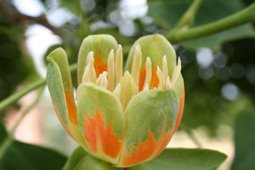
Liriodendron tulipifera - aka the Tulip Tree

Toddington Manor has a wonderful backdrop - many established specimen trees planted by the previous Victorian inhabitants. One of these is a fine example of a Liriodendron tulipifera, you can see how large it has grown in the photo. It is on the right hand side, on the left is a wellingtonia (Sequoiadendron giganteum) and a Red Horse Chestnut (Aesculus x carnea). It has now finished flowering, but many visitors merrily walk past it without looking up, missing the hundreds of flowers tucked between its leaves. As they are a similar shade of green as the leaves, from a distance, the flowers just look like browning leaves.

But up close - wow!

Immediately you can see where the common name originates from. The flowers last for just about a month during June and are about the same size as an average tulip flower.

Also worth mentioning are the unusual leaves, with lobes and a notch at the tip which makes it look like it has been cut off. These turn a lovely buttery yellow in Autumn.

potager for vegetables and cut flowers

Our ornamental potager at Toddington Manor is growing away now, after dire weather for the first six weeks or so. This is Rachaels (our WRAGS trainee) project this year, to design a planting plan, which was colour themed with rich purple and reds, along with creamy white cut flowers such as ammi major, antirhinuums, helianthus 'Vanilla Ice' and wonderfully scented sweet peas - 'Beaujolais' and 'Mrs Collier'.


Earlier on May 2nd, we organised a workday for the WFGA (Womens Farm and Gardens Association) to plant and sow our potager. Members pay a small fee to attend the workday, and have chance to be taught new skills, we manage to complete the sowing and planting in one day, and we all enjoy the cakes! The gardeners had started sowing seeds back in March in the greenhouse so a few plants have a head start before being planted out in modules. Others were sown direct into the prepared soil.


Rain followed the following day, and was followed by cold wet horrible weather for the next two weeks - not great conditions for seeds to germinate. The plants sat and sulked also, until the sun came out, and for four weeks, baked dry under the relentless hot sunshine.

Now... I know gardeners tend to moan about the weather (it is never quite right!) but it has been extremely unusual this year. The result is that a few seeds didn't make it, so have been resown and to add insult to injury, a rabbit seems to have made its way into the walled garden, and is enjoying the lettuce...


But nature has its own way of dealing with these trials, and although, as the photo shows, it is a little bare in places, it will catch up and be as beautiful as it was last year. The sweet peas , mange tout (the curiously named 'Ezethas Krombek Blauwschok'), ammi major , euphorbia oblongata are all flowering well, and as I write this, the vase of sweet peas smell wonderful!


Growing tomato plants

This year we have made time to grow a few indoor crops in our Victorian greenhouse and vinery, including Cantaloupe melons (Blenheim Orange), Ridge cucumbers (Marketmore) and 3 different varieties of Tomatoes (Gardeners Delight, Sakura F1 and Brandywine)

We sowed our Tomatoes on 6th March in a heated propagator, by 21st March they were ready to prick out into larger, individual pots.

The trick with tomatoes is to keep them moving itno a bigger pot as soon as the roots have filled the pot - without letting them get potbound.


Three pot sizes later.... and they also needed tying in to a cane, to stop them falling over. We create a neat figure of eight using string, and not too tight as the stem will expand as the plant grows.

All our varieties are cordon tomatoes or indeterminate, which means the main shoot will continue to grow - given its own way. However, the growing tips will be pinched out after a certain number of fruit trusses have formed depending upon whether it is growing in the greenhouse, vinery or outside.

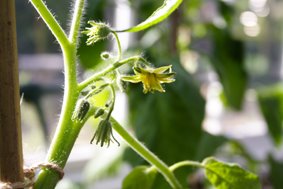
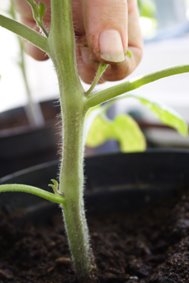
With this type of tomato, the side shoots need removing so growth is directed into the developing fruit, not excess foliage. At the axil of each leaf the tiny shoot is just pinched out with my fingers. If you miss one, it will get quite large quite quickly, so be sure to keep a eye on them!

As they need watering most days in the warm weather it is easy to look along the stem each time to see if any need removing - and you enjoy that lovely scent of tomatoes each time it is bruised - takes me back to my childhood each and every time!

Constant watering is best - they dont like being either waterlogged or too dry, but a little every day ensures the fruit will not be prone to splitting. Also, we spray a few whitefly with insecticidal soft soap on the tips.


10th of May, so about 2 months after they were first sown, the first exciting tiny green tomatoes are developing now - we now start feeding every two weeks with a high potash feed to ensure the best quality crop.

Plenty of high temperatures and sunshine means the fruit grow quickly and start to ripen, the first to turn red is Sakura F1, and looks like Gardeners Delight will be next, all by the 8th June. Picked fresh and warm from the plant, a quick wipe on my sleeve - I really should just check if they are fully ripe yet!!!

Paeony 'Duchess de Nemours'

One of our many Paeonies, the white cultivar 'Duchesse de Nemours' just opening in the morning sunlight.

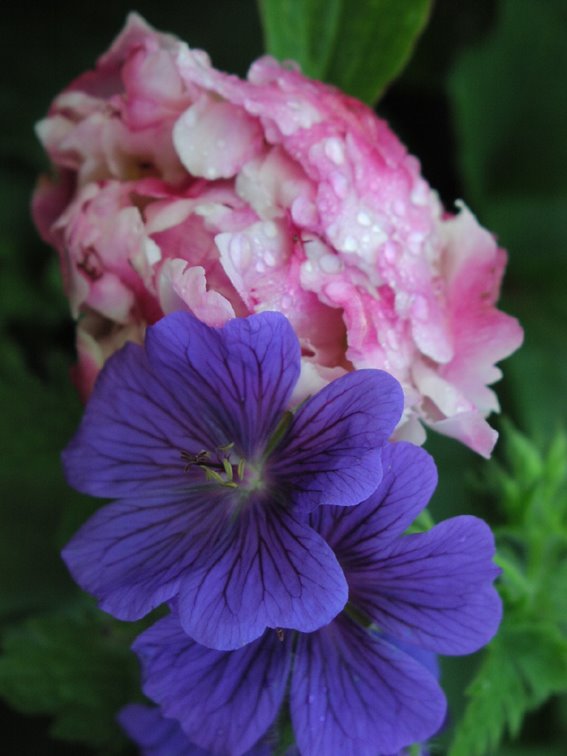
Geranium magnificum and Paeony


You can't get a more sumptious combination than this!

Iris Sibirica 'White Swirl'


A wonderful clear white, with a hint of yellow at the base. This iris prefers
damp soil and some shade.

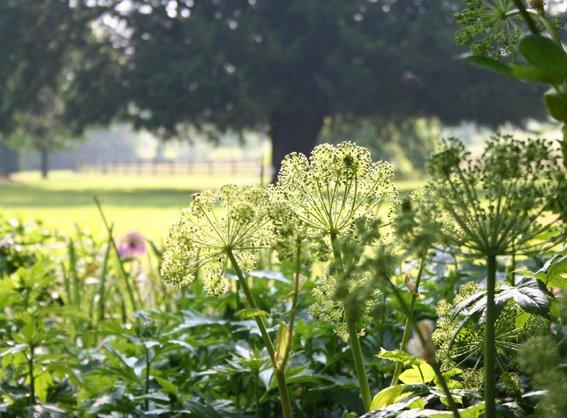
Angelica archangelica


Angelica archangelica flowerheads add a lovely structural element to the herbaceous borders

Garden Open Day

Our Annual Garden Open Day was a great success, with over 600 visitors to the garden. The weather was how you would describe as 'changeable' with a few short, sharp showers for good measure, but spells of welcome sunshine too. Still too nippy for the end of May though!

As we have had awful weather for the last two weeks - very cold and wet, the flowers that are usually looking great were still tight in bud, but the hostas, alliums and bluebells were looking perfect (if I dont say so myself!)

As all 5 gardeners were helping on the advice desk and selling plants we had propagated ourselves, we were able to sneak out for a visit to the other gardens in Toddington that were open on the same day. The ones we managed to visit really were quite varied and different, and in each one, there were ideas that could inspire other gardeners, be it how to deal with a difficult shady spot, awkward levels, tiny spaces or recycling in the garden - gardeners are the most inventive people out there, I am sure.

Fascinating Tales from the past

On the open day we had the pleasure of meeting two very interesting people. First was a gentleman, who introduced himself as the grandson of a previous Head Gardener, Horatio Plumb who worked at Toddington Manor for Colonial Skinner in 1914. Unfortunately he did not have any photos of Horatio at the manor (that would have been wonderful to see) but is was very interesting to talk with somebody who has direct links with the history of the manor. It would have been SO interesting to talk to Horatio him self - I bet a few things have changed since he was Head Gardener! (I wonder what he would of thought of a female in charge?!)

Then a lovely lady introduced herself as a evacuee in the Second world War, who arrived with her mother and 5 brothers and sisters to spend the duration of the war in the safety of the country, while bombs were being dropped on London. Again, a lot of changes have happened, but the memories were fascinating to hear.

It is great for people to make the effort to revisit the Manor that have a place in their family history, and to hear their stories.

May in the Garden


Well, what a month! Apologies for not posting much this month, but we seem to have not stopped work at all. The saying 'March winds and April showers bring forth May flowers' has not applied to 2006.

More like 'May wind and May showers bring forth May flowers'!

Still, we can cope with whatever the weather can throw at us, we are hardy gardeners... The last week has been spent mowing, tiding, sweeping, weeding, rushing, and changing wet gloves for a fresh pair each break, as we get ready for our open day on the 29th, Monday Bank Holiday.

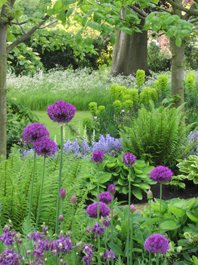
The plants are revelling in the lush conditions, and when the sun does come out, I am sure you can hear the leaves growing. As you can see in the picture, the alliums and bluebells along the length of the Herbaceous Borders look stunning at the moment, the ferns and hostas are unfurling and euphorbia charachias subsp. wulfenii with its acid green flowers adds a lovely, sharp edge to the colour scheme.

Put it in your diary, only 4 days left to go - and the weatherman promises no rain!